Introducing Cap Homestead Program
Jan 22, 2026

With Cap’s core infrastructure now battle-tested and producing real fees with institutional partners, we’re entering the next phase of the protocol.
Homestead marks the transition from experimentation to sustained production. To support this shift, Cap will run two parallel programs: one designed for delegators powering the yield engine, and one for cUSD holders participating at the digital dollar layer.
How Homestead participants are rewarded will be announced towards the end of the program. Stay tuned!
Thank you to all who participated in Frontier. We hope that it was all you expected and we welcome you to join Homestead.
Homestead timeline
Start date: January 29th, 2026
End date: July 23rd, 2026
Note: The newly deployed Pendle markets will receive Frontier Program points from January 19th to January 29th. After this period, Cap Pendle markets will start to earn Homestead Program points.
cUSD Program
Thank you to everyone that has minted cUSD throughout the Frontier program.
In Q4, we witnessed the validation of our user protection features. Several stablecoin meltdowns proved that users should instead rely on smart contract rules and open market incentives. We’re proud to have kept users safe through this time due to our adherence to core Ethereum values of trustless designs and transparency.
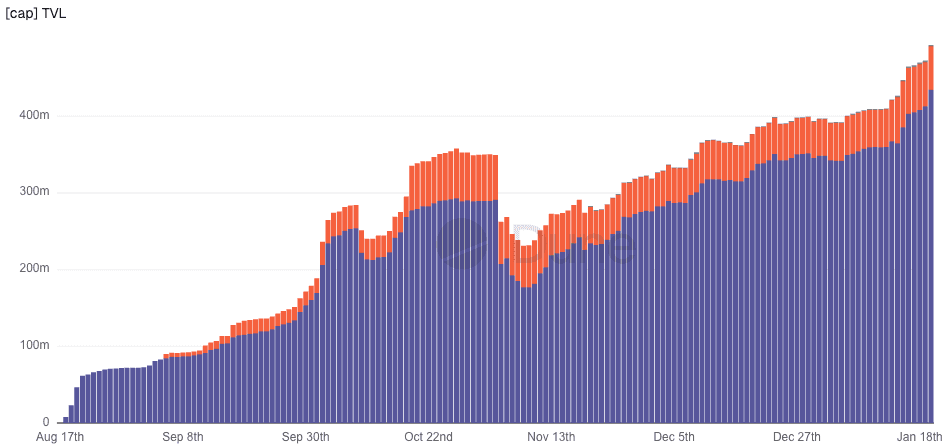
Thanks to the market’s continued trust in Cap, we have been able to surpass our all time high deposits from before this market volatility.
As with the Frontier program, users will have a choice: points or yield. stcUSD will provide yield in the form of cUSD, paid out once a day. For those that opt for points, the following activities will result in caps accrual.
Homestead Program cUSD activities:
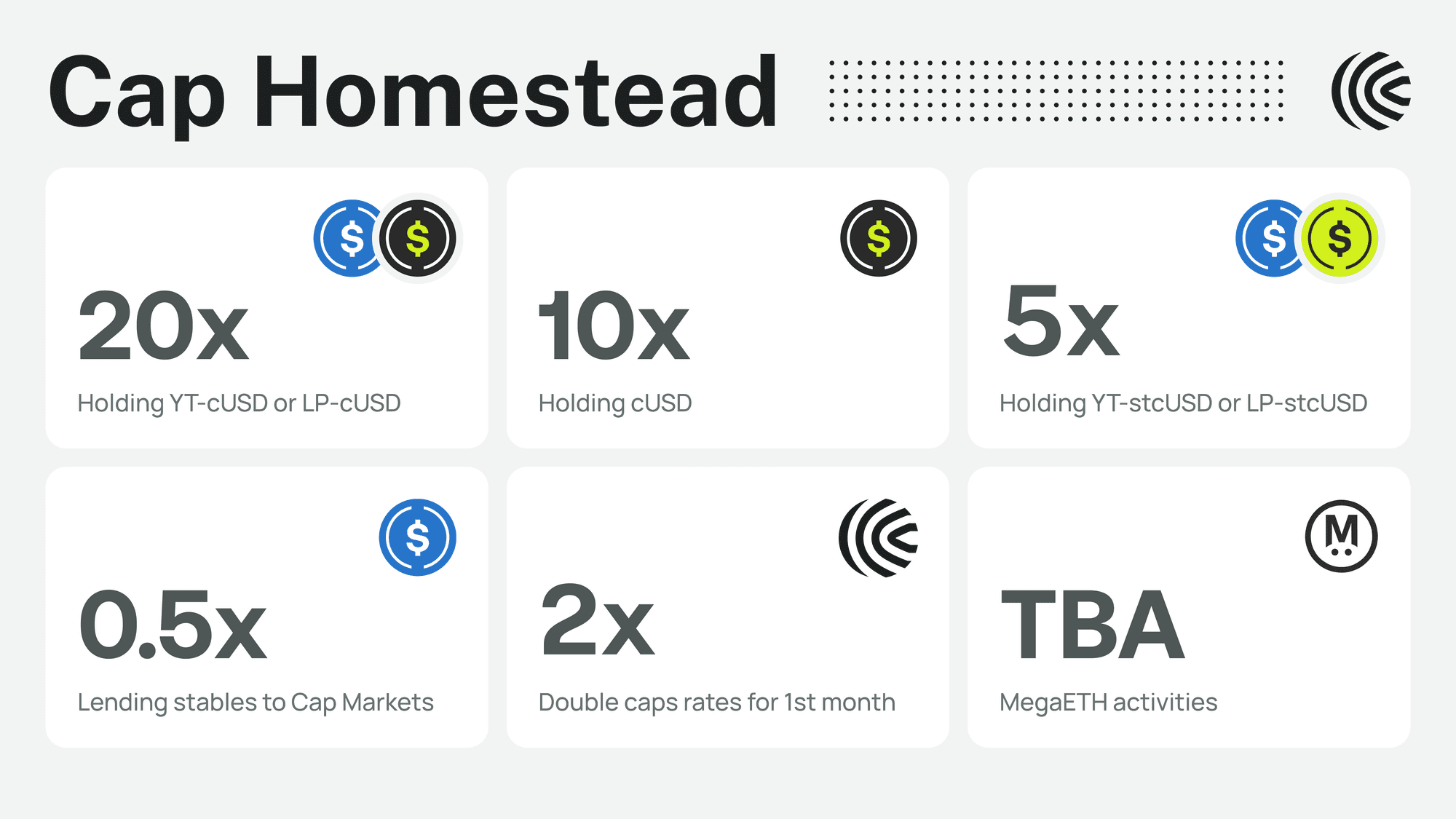
Holding cUSD: 10x caps per cUSD per day
Holding YT/LP-YT cUSD on Pendle: 20x caps per token per day
Holding YT/LP-YT stcUSD on Pendle: 5x caps per token per day
Lending stablecoins to stcUSD and Cap PTs on lending markets: 0.5x caps per dollar per day
Activity on MegaETH: more information will be released on MegaETH-native incentives as the chain launches. Please follow Cap’s community handle on X for updates.
First month boost: all cUSD activities will receive double caps for the first month.
Delegator Program
Q4 marked the start of our delegator push. We saw several pilot programs kickstart delegations, with all major delegators on Symbiotic engaged with Cap operators. These programs have yielded tangible results. Today, Cap earns more real fees than any shared security network across Symbiotic and EigenLayer.
Cap has onboarded institutional borrowers with a cumulative AUM exceeding one trillion dollars. These operators come from various backgrounds, from bluechip TradFi players like Susquehanna and Flow Traders, to respected crypto names like Hyperithm and Stakestone.
Given that no operator will be able to outperform the market forever, a variety in operators in necessary for the continued competitiveness of Cap’s yield engine.
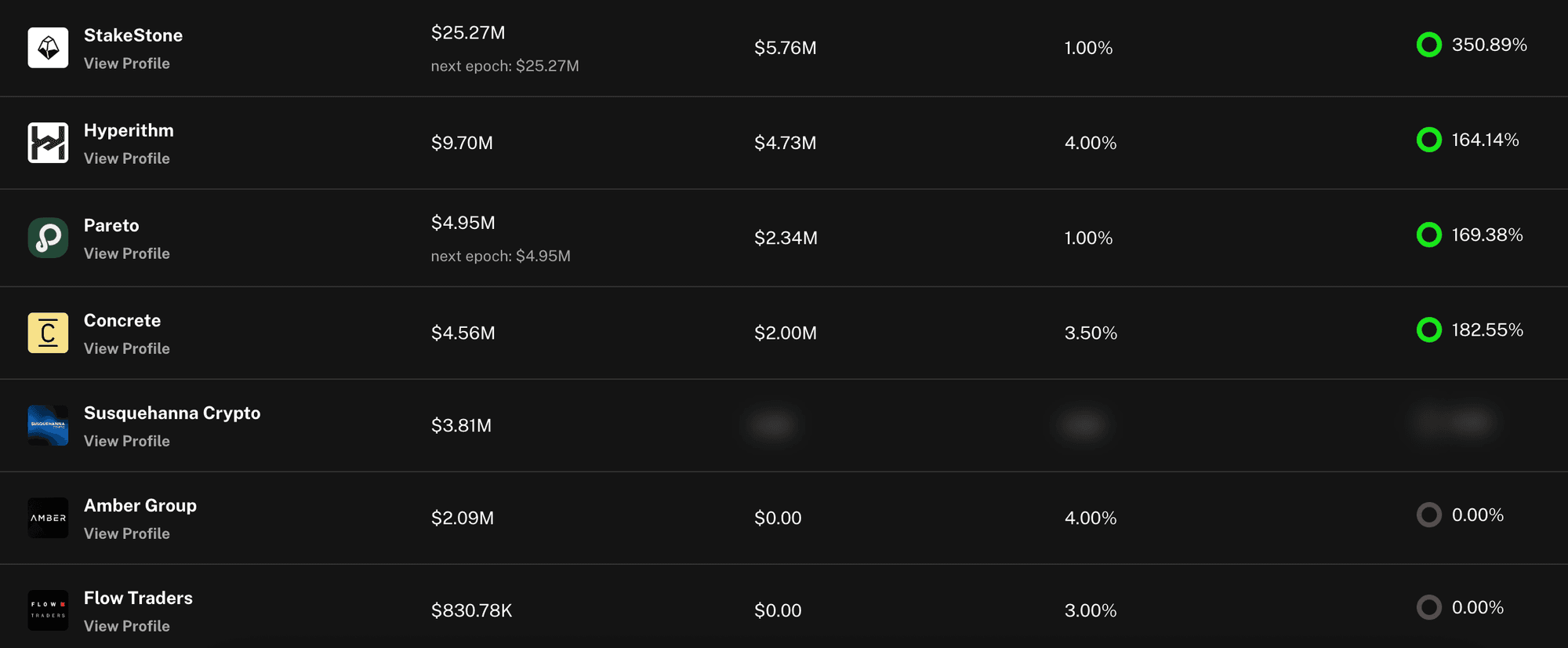
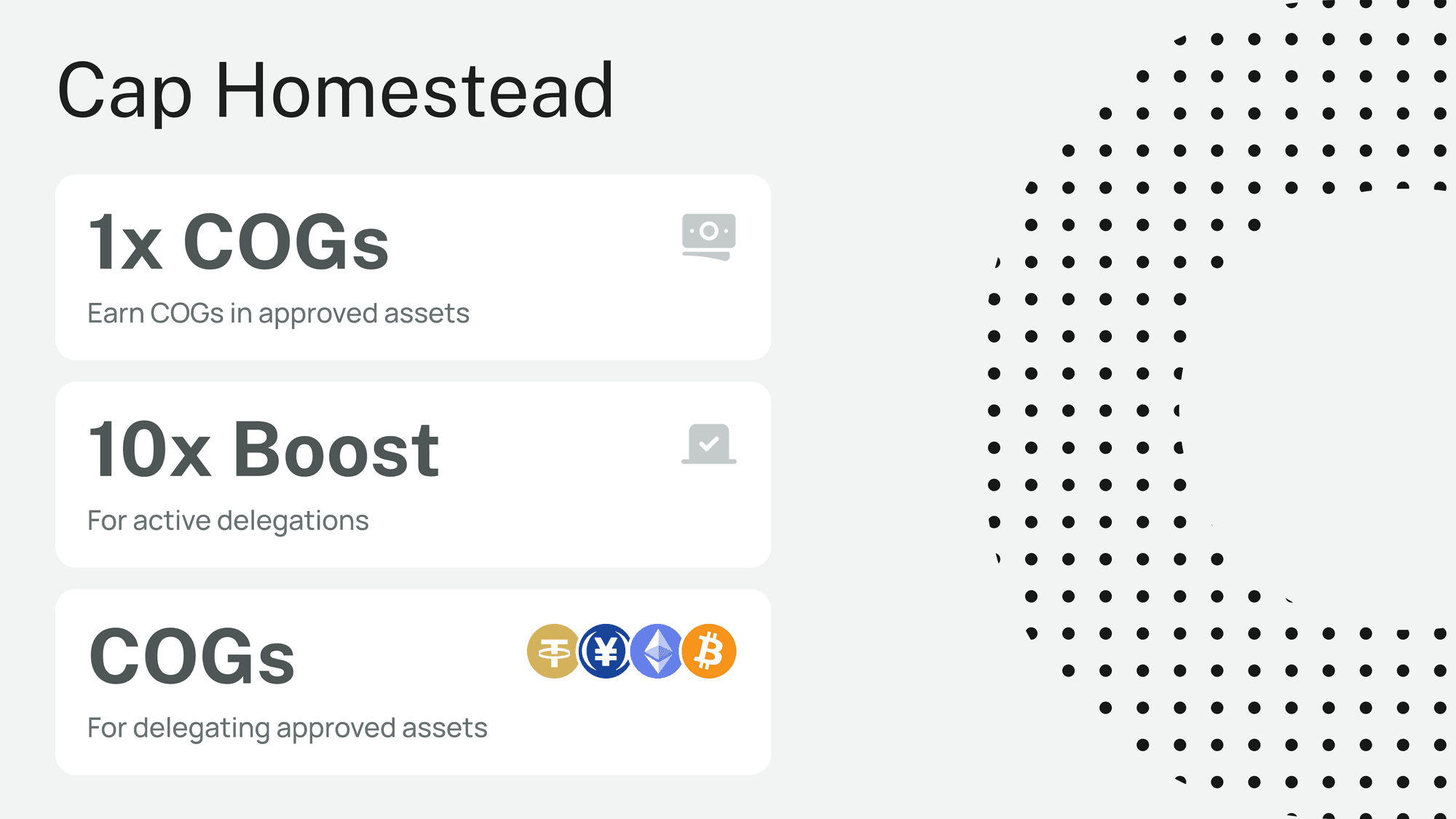
Cap will continue to track delegations via the COGs points program, which resets on January 29th, 2026. Delegators whose operators are borrowing will receive an up to 10x boost on their COGs. See formula below for COGs calculations.
COGs = Delegation Value * min (18 * LTV + 1, 10)
Delegations are designed to be used by institutions with the resources to enter into agreements with other institutions. As such, we are placing a minimum delegation of $2M to earn cogs.
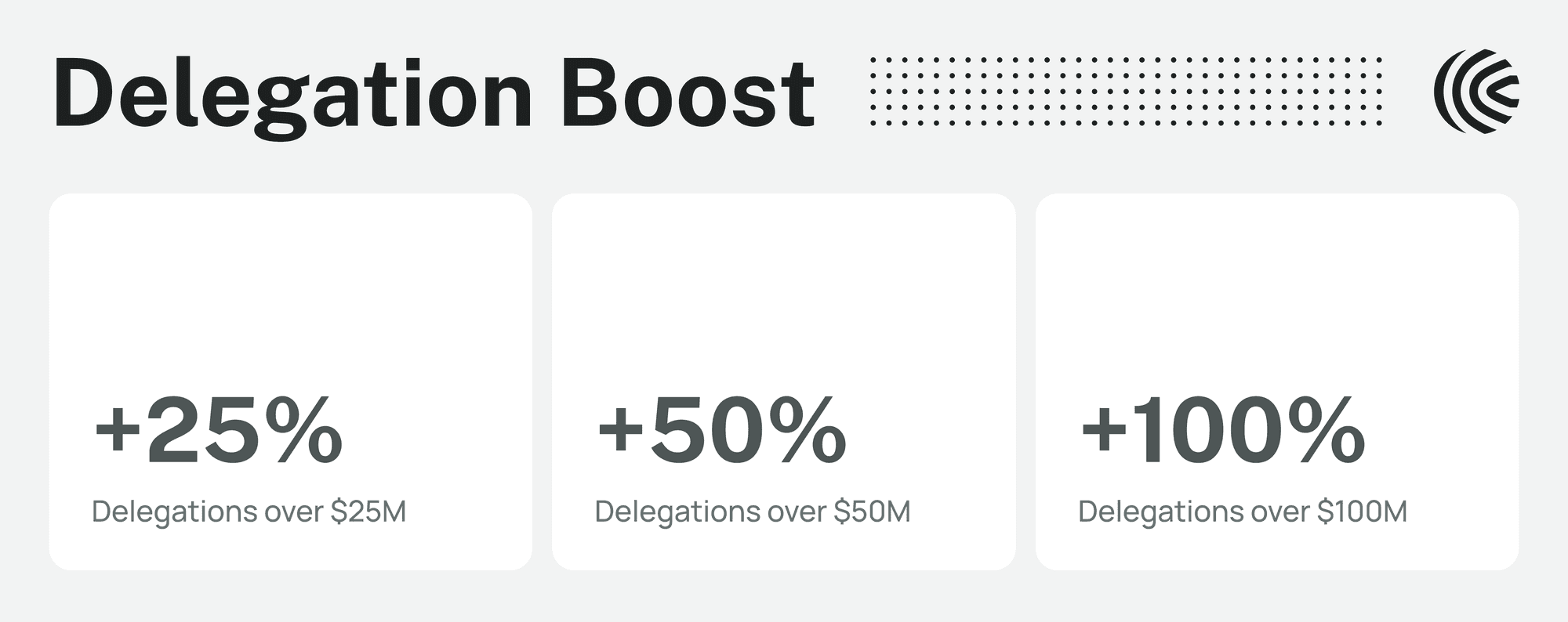
Introducing Delegation Boost
In addition to the previous COGs rewards, we are introducing a new Delegation Boost. Delegations over certain USD amounts will receive a multiplier boost. For example, a $100M delegation will effectively receive double COGs.
Homestead is designed to reward real participation in a system that has already proven itself.
Over the coming months, delegators and cUSD holders will play distinct but complementary roles in scaling Cap’s yield engine and monetary layer. As always, incentives remain aligned with real usage and the long term sustainability of the protocol. This will ensure Cap continues to grow as a durable, institution-grade financial protocol.